
The supply chain landscape is becoming more unpredictable than ever. Disruptions, rising costs, political instability, and the growing demand for sustainability are all major concerns. As businesses face these challenges, the pressure to innovate and stay ahead of the competition is stronger than ever.
But here’s the good news—the next few years present a real opportunity to get ahead. By keeping up with these trends, businesses can not only tackle today’s challenges but also position themselves to stay ahead of the game. Let’s explore these trends shaping the industry to future-proof your business.
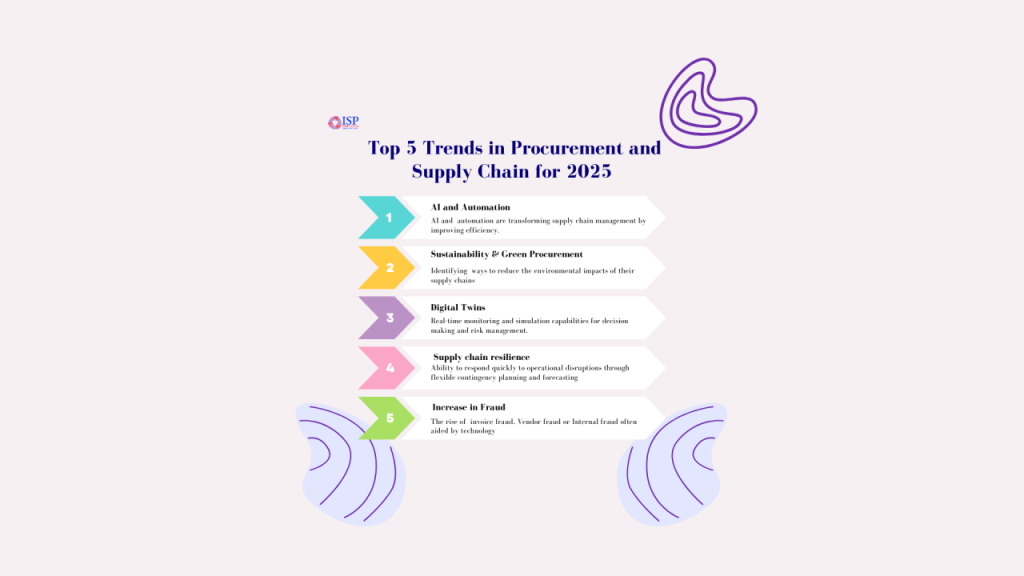
1. AI and Automation
Chinese e-commerce giant JD.com saw a 92% increase in net income, largely driven by AI-powered cost savings. Similarly, technology like Artificial Intelligence (AI) integral in automation are transforming supply chain management by improving efficiency and decision-making.
By implementing AI solutions, businesses can make significant strides in procurement processes. McKinsey reports that AI can automate crucial functions such as customer service, marketing, sales, and inventory management. This automation could potentially boost productivity by 1.2% to 2.0% of annual revenues. Companies can harness these benefits by integrating AI into their operations, freeing up resources for more strategic initiatives. Additionally, AI provides real-time tracking of key performance indicators, helping businesses monitor their progress and make necessary adjustments to stay on track.
2. Sustainability and Green Procurement
With companies actively working to reduce their environmental impact, sustainability is becoming a key focus in supply chain management. According to the World Economic Forum, building sustainability into supply chains is essential for meeting climate goals, as they account for more than 50% of global greenhouse gas emissions.
A significant part of Environmental, Social, and Governance (ESG) initiatives is addressing Scope 3 emissions—those indirect emissions across the entire value chain. But sustainability goes beyond just reducing emissions. It also involves improving labor conditions and ensuring ethical sourcing. Businesses should set clear, measurable targets to cut carbon emissions and waste, while consistently reporting progress to stakeholders.
3. Digital Twins in Supply Chain
Digital twins—virtual replicas of physical assets or processes—are enhancing supply chain operations by providing real-time monitoring and simulation capabilities. Accenture notes that digital twins enable companies to understand supply chain behavior, predict abnormal situations and facilitate an action plan for decision making and risk management.
To stay ahead, companies should create digital models of key supply chain components to simulate and optimize operations. It can further be combined with Internet of Things (IoT) devices to collect real-time data, and AI algorithms to analyze data from digital twins, and gaps for improvements.
4. Supply chain resilience
The business climate has become volatile and businesses must learn how to navigate a storm of uncertainty. Health crisis, geopolitical unrest, amongst others keep arising and businesses need to be able to respond quickly. An example is the U.S.-China trade tensions which have led to tariffs on various goods, affecting industries worldwide. These tariffs can increase costs and create uncertainty for companies relying on international suppliers.
Therefore, businesses are tasked with the responsibility of identifying risks in their supply chain and developing contingency plans. For businesses, it translates to diversifying supplier base, increasing supply chain visibility and being proactive in risk management.
5. Increase in Fraud
According to the Institute of Supply Chain Management, post-pandemic, supply chain fraud rose by 13% year-on-year, inflicting financial pains on businesses. In procurement, this could translate to invoice fraud, Vendor fraud or Internal fraud, where employees leverage their insider knowledge to commit one fraud. With technology like AI, these frauds have become more pronounced and businesses without a proper cyber security system, could fall prey resulting in loss of data and money. It is therefore important to not only invest in anti-fraud software but also organise regular training for employees on cyber security while emphasizing on the impact.
Stay Ahead
These trends are just the beginning of what’s expected to shape the supply chain industry this year. However, the key to success lies in truly understanding the landscape and taking proactive steps to future-proof your business. It’s not enough to simply react to disruptions—taking definitive, forward-thinking action today will set you up for long-term stability. By strengthening your supply chain and safeguarding the assets that matter most, you’ll ensure your business remains resilient and ready to meet the challenges of tomorrow.